
Can Cats Really Watch TV? The Science Behind Why Modern Screens Finally Make Sense to Them
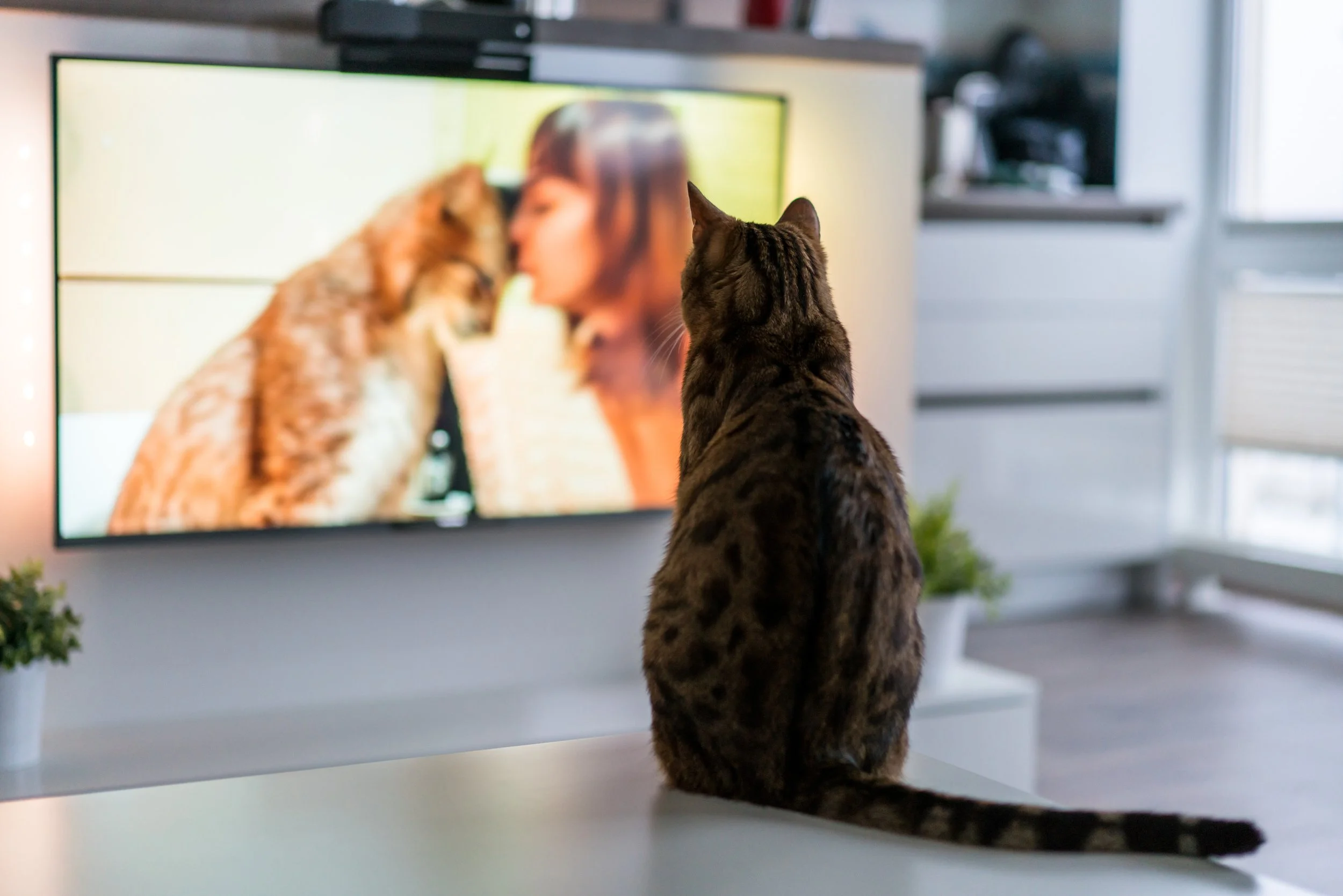
For decades, people have sworn their cats were watching television with them. They’d see their cat look at the TV and assume they were taking in the same content alongside them. But here’s the truth: for much of television history, cats weren’t actually seeing what humans were seeing.
Thanks to major advances in display technology, modern TVs and computer monitors have officially become cat-friendly entertainment. In fact, most cats who live in a household with a relatively modern TV can see pretty much the same as we do.
Why Can’t Cats See Older TV Screens?
Back in the era of bulky cathode-ray tube (CRT) televisions and monitors, humans saw a smooth, continuous picture. It may not have been high definition, but it was better than nothing. Cats, on the other hand, were not able to enjoy the screen.
Refresh Rates
Older TVs refreshed their images at around 24 to 30 frames per second (fps). That means every second, the screen flashes images 24 to 30 times. This is fast enough for the human brain to blend them all into one smooth motion.
Cats, however, have a much higher threshold. Their eyes function at around 50 to 70 frames per second (fps). In simple terms, what looks like a stable picture to humans appears as rapid flickering, almost like a strobe light, to cats. If you’ve ever seen video of a CRT monitor recorded by a video camera, be it digital or analog, you’ll see a similar effect.
When looking at older TVs or monitors, cats might see:
· Flickering shapes
· Broken motion
· Brief ghost-like images
· Or nothing interesting at all
The Game Changer for Cats
As soon as flat-screen TVs and monitors (not CRT) entered our homes – think LCD, LED, OLED and now QLED – things changed for felines. These high-quality displays came with much higher refresh rates. That meant cats could finally get a solid visual grasp on what was taking place on the screen.
Today's TVs and monitors typically refresh somewhere between 60 and 120 fps, with some higher-end gaming displays reaching 240 fps.
These speeds greatly exceed something called a flicker perception threshold, on a cat, meaning:
· The image looks stable
· Movement appears fluid
· Objects are visible long enough to capture attention
· Colours and brightness are clearer than before
· For the first time, cats can watch TV as a continuous stream of motion, not a strobe of disconnected frames.
Better Colour & Contrast
Cats don’t see colour the same way humans do. They are known as blue-yellow dichromats, meaning they struggle with reds but excel at motion and contrast.
Modern displays offer higher contrast ratios, sharper edges, more intense blues and yellows, and more natural lighting. All these improvements make things on the screen far more noticeable to cats.
In combination with the higher refresh rates, TVs were suddenly now viable forms of entertainment for cats, and now we have things like:
· Bird feeder livestreams
· Fish tank livestreams
· Dedicated YouTube channels for cats
· Squirrel and other forest animal hidden camera videos
· High-contrast toys moving across simple backgrounds
· Video games and apps for cats to interact with
Safety Tips
It’s okay to let your cat play with your TV. They are not likely to damage it by batting at the screen, but their little paws will leave dirt marks, so be sure to give it a Windex once in a while. As far as safety goes, there are a few things to keep in mind.
· Use wall mounts or sturdy furniture to prevent tipping
· Avoid letting your cat climb the TV
· Supervise if your cat gets too “enthusiastic”
· Keep playtime to a minimum unless you want them to get into the routine of batting things on the TV