
When a cat crouches down, stretches out their neck and starts making that familiar hacking sound, most of us have the same thought, “Here comes a hairball.”
But what if nothing comes out?
While the occasional hairball is a normal part of sharing your home with a cat, repeated coughing or wheezing can sometimes point to something entirely different: feline asthma.
Asthma is a respiratory condition that causes inflammation and narrowing of the airways, making it more difficult for a cat to breathe. It can range from relatively mild to potentially life-threatening, which makes recognizing the warning signs especially important. Not only that, it is a progressive illness that when not taken care of, can become a major issue.
What Does Feline Asthma Look Like?
One of the tricky things about feline asthma is that it doesn't always look particularly dramatic. A cat experiencing a mild asthma episode may simply crouch low to the ground, extend their neck and cough several times. Because this posture can look remarkably similar to a cat trying to bring up a hairball, asthma can sometimes go unnoticed.
Some symptoms to watch for include:
· Repeated coughing or hacking without producing a hairball
· Wheezing, particularly when breathing out
· Rapid or laboured breathing
· Noisy breathing
· Crouching low with the neck extended while coughing
· Reduced energy or reluctance to play
· Breathing through an open mouth
It’s important to remember that some symptoms can come and go. A cat may appear perfectly normal between episodes, which can make it tempting to dismiss an occasional coughing fit. Recurring coughing, however, is worth discussing with your veterinarian.
When Does It Become an Emergency?
Any situation in which a cat is clearly struggling to breathe should be treated seriously. Open-mouth breathing, pronounced movement of the abdomen or sides while breathing, severe wheezing, weakness or collapse can indicate significant respiratory distress. Gums or tongue that appear bluish, greyish or unusually pale are also emergency warning signs.
If your cat appears unable to breathe comfortably, don't wait to see whether the problem resolves on its own. Contact an emergency veterinary clinic immediately and keep your cat as calm as possible while arranging care.
Breathing difficulties aren't something to diagnose at home. Asthma is one possible cause, but heart disease, respiratory infections and other conditions can produce similar symptoms.
What Causes Asthma in Cats?
Feline asthma is generally associated with an allergic reaction within the airways. Exposure to an allergen can trigger inflammation, causing the airways to constrict and making breathing more difficult.
The exact trigger isn't always obvious, but potential irritants can include cigarette or other smoke, dusty cat litter, household sprays, perfumes, scented candles, aerosol products and dust.
That doesn't necessarily mean one particular household product "caused" a cat's asthma. Cats can have different sensitivities, and determining triggers can take some detective work.
If your cat has been diagnosed with asthma, your veterinarian may recommend reducing possible airborne irritants in your home.
Veterinarians therefore need to consider a cat's symptoms and rule out other possible causes. Depending on the situation, diagnosis may involve a physical examination, chest X-rays and other tests.
If your cat has occasional coughing episodes but seems normal by the time you reach the veterinary clinic, safely recording an episode on your phone can give your veterinarian a much clearer picture of what's happening. Don't delay urgent care to get a video, though. If your cat is struggling to breathe, go get help right away.
Can Feline Asthma Be Treated?
There isn't a simple cure for feline asthma, but it can often be managed successfully. Treatment commonly focuses on reducing inflammation in the airways and helping keep them open. Veterinarians may prescribe medications such as corticosteroids and bronchodilators, depending on the individual cat and severity of the condition.
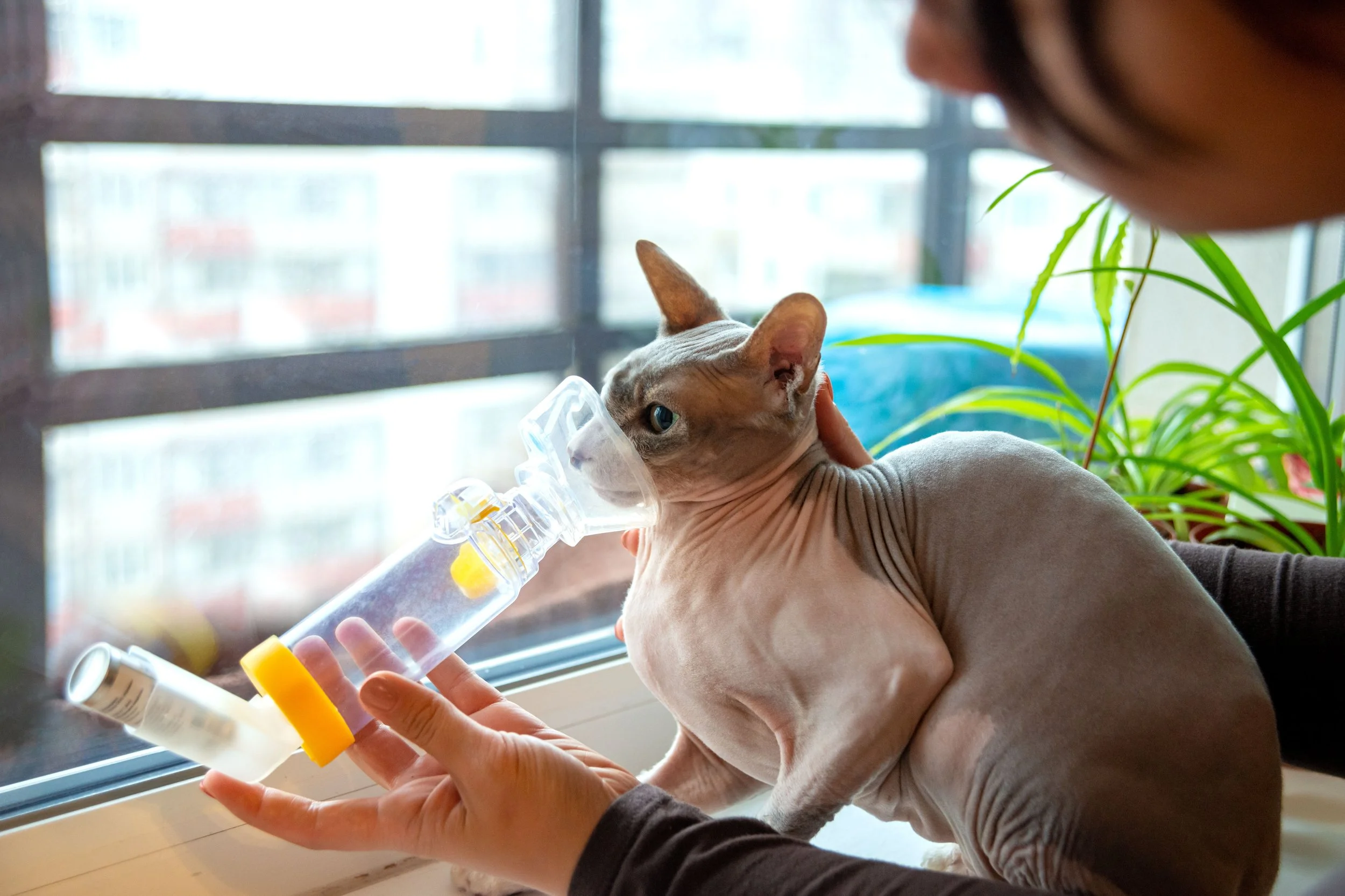
Some cats receive medication through a specially designed inhaler and spacer system. It might sound impossible to convince a cat to participate in such a thing, but many cats can gradually become comfortable with the process when it is introduced patiently and positively.
Never give a cat human asthma medication or change the dose or frequency of prescribed medication without speaking with your veterinarian.
Reducing Potential Triggers at Home
For a cat with asthma or other respiratory sensitivities, improving indoor air quality may be part of their long-term care.
Depending on your veterinarian's recommendations, that could mean choosing a low-dust, unscented litter, avoiding smoking around your cat, reducing the use of heavily scented sprays and aerosols, keeping the home reasonably free of dust and ensuring good ventilation.
It can also be useful to keep track of when coughing episodes happen. If they repeatedly occur after using a particular product, cleaning a certain room or changing litter, that information may help you and your veterinarian identify possible triggers.
Don't Assume It's Just a Hairball
Cats cough for a variety of reasons, and a single strange noise doesn't automatically mean your cat has asthma.
The important thing is to notice patterns. If your cat repeatedly crouches down and coughs but never produces a hairball, wheezes, seems unusually tired or appears to be breathing differently, it's time for a conversation with your veterinarian. Our cats can't tell us that their chest feels tight or that breathing suddenly feels more difficult. They rely on us to notice when something isn't right.