
Yes, You Can Train a Cat: How Play and Learning Keep Your Cat’s Mind Sharp
There is a long-standing belief that dogs can be trained, while cats simply tolerate our presence until dinner time. Cats, after all, have a reputation for being independent, stubborn and completely uninterested in doing anything they haven't decided is worth doing.
But the truth is that cats are remarkably good learners. The trick is understanding that training a cat doesn't necessarily mean teaching them to sit, stay or shake a paw. For cats, learning should be more about play, curiosity, problem-solving and discovering how the world around them works.
In fact, every time your cat figures out how to reach a favourite toy, opens a cupboard, learns where treats are kept or discovers that batting a particular object makes an interesting noise, they are learning something new.
Curiosity Taught the Cat
Cats are curious animals, and curiosity is an important part of learning. In the wild, a cat's survival depends on being able to investigate its surroundings, recognize patterns, solve problems and respond to changing circumstances.
While indoor cats may not need to hunt for their dinner, their brains haven't suddenly stopped working. This is why mental stimulation is so important. A cat that has plenty of opportunities to explore, play and figure things out can be exercising their brain just as much as their body.
Interactive toys, puzzle feeders, treat-dispensing toys and games with their human companions can all provide opportunities for cats to learn.
Play Is More Than Just Fun
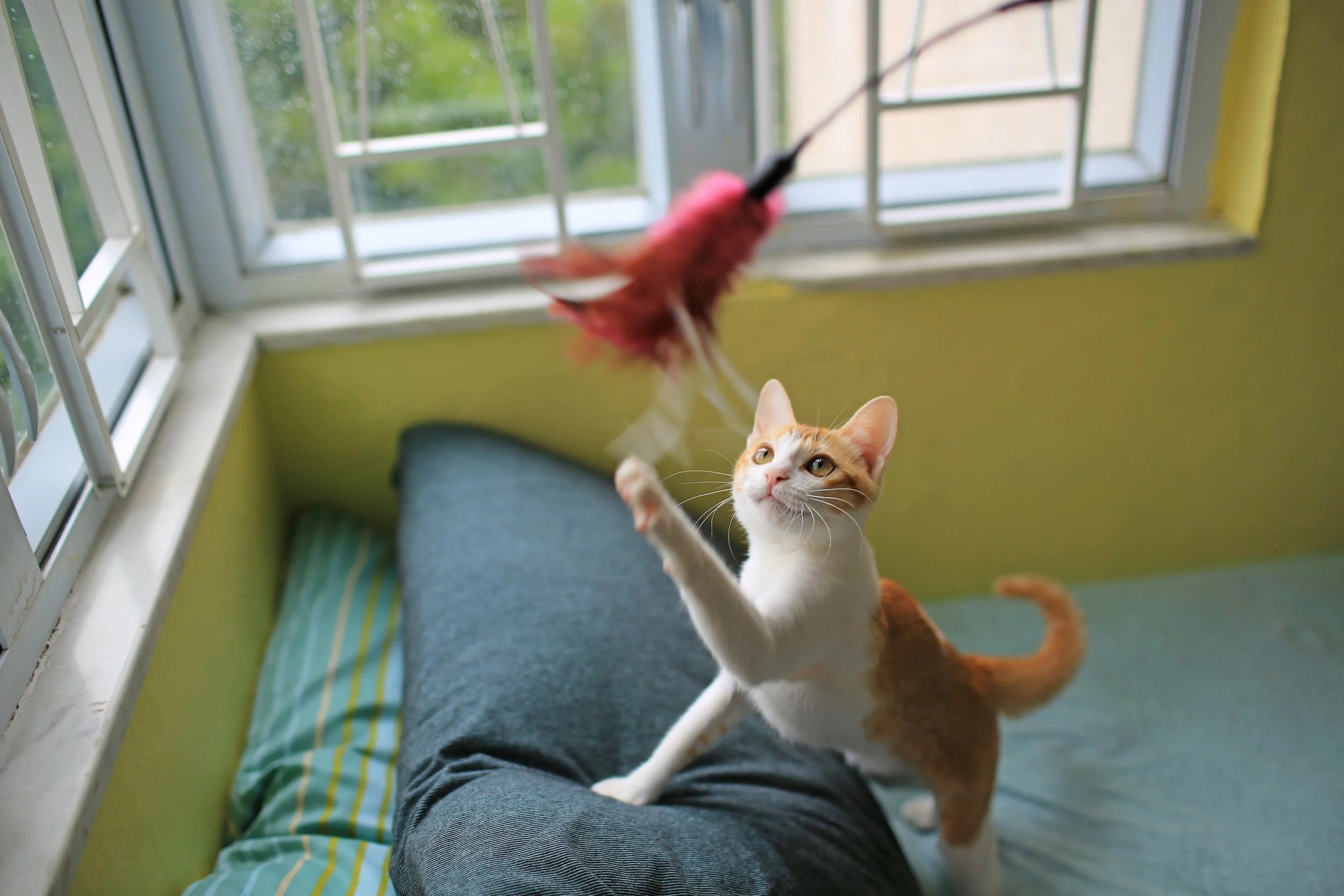
Play might just be the number one learning tool for cats. When your cat chases a feather toy, pounces on a ball or tries to catch a toy mouse, they aren't simply entertaining themselves. Play allows cats to practise many of the behaviours associated with hunting. They watch, wait, stalk, chase and pounce!
Play also gives cats an opportunity to make choices. Rather than simply being entertained by a toy, they get to decide whether to chase it, where to approach it from and when to make their move.
That makes interactive play particularly valuable. When you move a wand toy around and allow your cat to decide how to pursue it, you're giving them an opportunity to think, react and problem-solve.
Yes, Your Cat Can Learn to Fetch
One of the most entertaining examples of feline learning is fetch. Some cats seem to naturally love retrieving toys, while others might learn to enjoy the game. It is also worth remembering that not every cat will be interested, and that's perfectly fine.
If you'd like to see whether your cat has a hidden fetcher inside them, start with a toy they already love. Lightweight balls, small plush toys and other toys that are easy to carry tend to work well.
Start by tossing the toy only a short distance. If your cat chases it, that's already a great start. If they pick it up or move toward you with it, encourage them. When they bring it back, reward them with something they enjoy, such as praise, a treat or another quick round of play.
Don't worry about making them immediately understand the entire game. You're helping them discover that chasing the toy, picking it up and returning to you leads to something good. It may take some time to reinforce.
Keep Learning Fun
The most important part of teaching a cat isn't the behaviour you are trying to achieve. It's making the experience enjoyable.
Training sessions should be short, positive and suited to the individual cat. Some cats will happily spend several minutes playing a learning game, while others may decide they've had enough after thirty seconds.
Pay attention to their body language. If your cat becomes frustrated, distracted or loses interest, it's time to stop. They are not dogs. They do not need to be scolded when they do not do what you want. This will only strain your relationship with them.
The real goal is to give your cat opportunities to think, explore, play and make choices. You can rotate toys to keep things interesting, introduce puzzle feeders, create opportunities for safe exploration around the home or simply spend a few extra minutes each day playing together. These activities provide physical exercise, mental stimulation and something equally important: quality time with you.
Remember: The best kind of training for a cat isn't about obedience. It's about giving them opportunities to use the remarkable mind they already have.